Open office environments may increase the risk of bullying among employees

New feature! Listen to this article as a podcast
Open office environments are designed to optimize workspace and promote collaboration among employees, but in the service of efficiency, they can also reduce privacy and harm employees' health and well-being.
The office landscape increases distractions and interruptions while limiting privacy during tasks and conversations, and this lack of privacy can contribute to workplace bullying.
This is shown by a Swedish study from Linköping University, based on a survey of 3,300 randomly selected professionals in Sweden.
The study states that density and crowding in open offices can trigger emotional reactions and interpersonal tensions. In particular, interruptions, distractions, and intrusions can affect the employee's attitude and cause friction.
Negative impact
"Increased bullying is a significant negative consequence of how we choose to organize the workplace. It is important to highlight because the topic has not been previously studied," Professor at the Department of Psychology at Linköping University, Michael Rosander, says.
His research team defines workplace bullying as "systematic and prolonged exposure to negative behavior from colleagues and/or superiors, where the ability to stop or prevent the treatment gradually decreases".
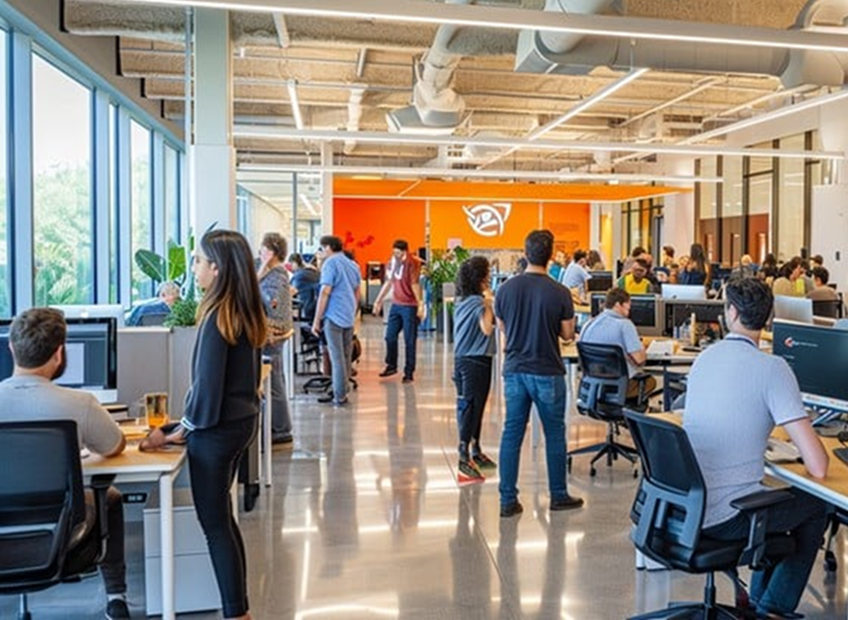
  Crowded noisy open-plan offices can trigger emotional reactions and interpersonal tensions. Interruptions, distractions, and intrusions can affect employee attitudes and cause friction. Photos: StockCake |
30% of those interviewed who did some form of office work on a daily basis stated they worked in a traditional open-plan office environment without retreat options.
13% worked in activity-based offices, where you sit in an open office some of the time but also have special rooms for tasks requiring peace and quiet. The rest had their own office or shared it with a few colleagues.
Deal with the conclict
The Swedish study hypothesises that in traditional open office environments, it is easier to notice other people's shortcomings and get irritated by them.
If someone takes it upon themselves to respond to a colleague’s behavior and there are no clear rules for handling it, there is a risk that it will escalate into bullying. The bullied person also has nowhere to turn.
 For employers who have, or are planning to introduce, open office environments, there are some lessons to be learned. First, they need to be prepared to handle irritation and conflicts before they become too big. |
For employers who have, or are planning to introduce, open office environments, there are some lessons to be learned. First, they need to be prepared to handle irritation and conflicts before they become too big.
Second, it is important to have spaces where employees can retreat and work undisturbed. People with similar needs and tasks can also be placed together to reduce the risk of disruption.
Social rust
The return-to-office movement has revealed a certain “social rust” in many workplaces, as office workers who have been working remotely or in hybrid arrangements for several years need to retrain how to communicate in close, face-to-face settings.
“The impacts of lockdowns and COVID-19 have caused a number of our social-professional behaviour patterns to be a bit lost,” says Brianna Cattanach, national head of mental health strategy and delivery at Australian insurer Allianz.
 The return-to-office movement has revealed some social rust in many workplaces, as office workers who have been working remotely or in hybrid arrangements for several years need to retrain how to communicate in close, face-to-face settings. |
"“When we’re mostly interacting in an online forum with emails and stuff like that, it looks very different from how you should behave when you’re physically present with someone and when you’re in meetings as a group.”
As companies enforce or encourage more in-person days, these gaps in social and professional norms are being exposed. There are clearly some professional standards of behavior that need to be adjusted now that we’re starting to work together physically again,” Brianna Cattanach adds. ●

Read more:
Acas.org.uk: Bullying at work - what bullying is
Liu.se: Increased risk of bullying in open-plan offices
News-medical.net: Open-plan office layouts linked to higher bullying risk
Hcamag.com: Workplace bullying claims surge as return‑to‑office strains bite