The more we are together - your post-Covid & hybrid office space 2026
New feature! Listen to this article as a podcast
Today, it takes significantly more than ergonomic office chairs, height-adjustable workstations, and free luxury coffee to motivate hybrid office workers to check in to the company's physical office.
Numerous studies show that in today's post-COVID office environment and workflow, it is the social relationships and experiences that motivate employees to overcome commute time and hassle, and decide to show up at the workplace.
Among employees, socializing ranks as the most important reason for meeting at the office, followed by collaboration and shared brainstorming.
"Our research shows that space designs supporting and encouraging connection and offering office workers varied ways to interact are becoming increasingly important in the workplace," the Global Research Director at international real estate services group JLL, Ruth Hynes, says.
Street-to-seat
In recent years, space designers have worked hard to develop increasingly sophisticated and spectacular 'Street-to-seat' experience designs and interiors for office companies that are clamouring to get employees back into the office.
Street-to-seat design is a holistic approach that focuses on employees' total arrival and workday experience journey from the moment they enter the office building (street) to the moment they sit down to work (seat).
 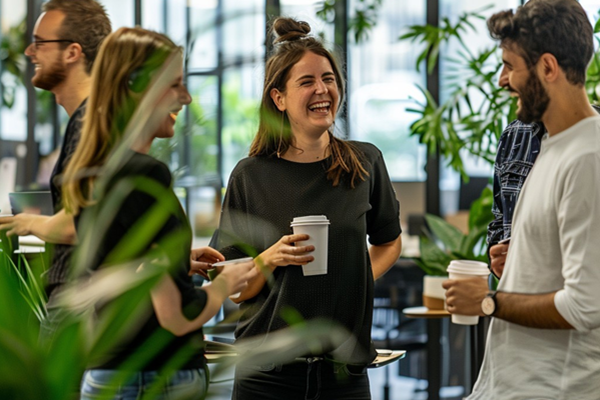 Numerous studies show that in today's post-COVID office spaces and workflow, it is the social relationships and experiences that motivate employees to overcome commute time and hassle, and decide to show up at the workplace. Photos: StockCake |
Office workers are more likely to come in when starting the workday is effortless. Easy parking, bike storage, public transportation, and an inviting lobby make a positive impression before work begins.
The workplace should emphasise features that employees don't have at home, making the office feel like an upgrade: Barista coffee islands, wellness rooms, fitness centres, high-quality lunch offerings, outdoor terraces, and green spaces.
Employees don't come to the office to sit alone at a desk. They´ll come for the community, for relaxed gathering zones, comfortable lounges, and pods for meetings and collaboration - space facilities that all appeal to affiliation, inspiration, and teamwork.
Social space design
"Most organisations measure office performance with occupancy rates and space utilisation data - and those metrics remain important. However, the real value of bringing people together goes much deeper than just getting employees to show up.
It’s about the relationships that help teams make better decisions, share important information faster and come up with breakthrough ideas," Ruth Hynes, JLL, points out.
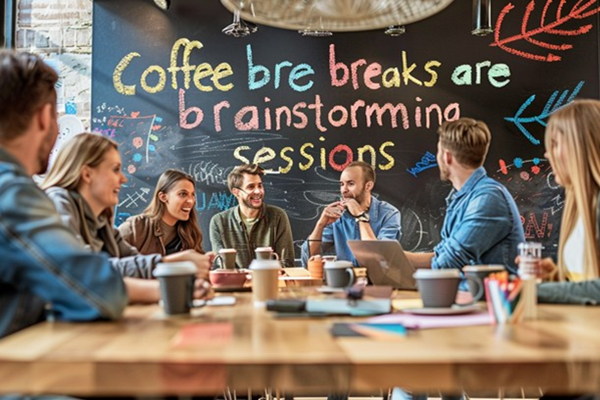 Employees don't come to their offices to sit alone at a desk, but for the community, for relaxed gathering zones, comfortable lounges, and pods for collaboration and meetings - space facilities that all appeal to affiliation, inspiration, and teamwork. |
Social space design prioritises office design that, in varying layouts and furnishings, supports, stimulates, and strengthens team and collective performance.
Workplace designers must think holistically and consider where and how people want to interact, and change workspaces function optimally for the company's individual employees, its teams, and the entire company.
The Main Street concept
A new design trend that focuses specifically on developing and optimising social cohesion and collaboration among office workers is attracting great interest and attention under the title of the Main Street concept.
Here, the office is anchored around a central thoroughfare that unites function and social energy in the same way as the city's lively main street, transforming the office into a destination that encourages increased traffic, contact, and community.
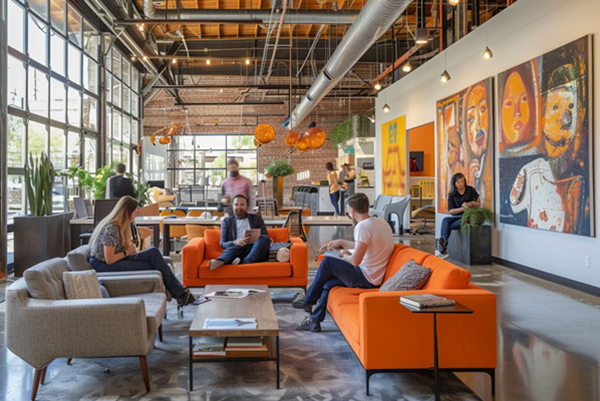 The Main Street concept anchors the office around a busy central thoroughfare that unites function and social energy like the city's lively main street, transforming the office into a destination that encourages increased traffic, contact, and community. |
The central corridor forms the social core of the workplace, providing direct access to the office's workstations, collaboration zones, and common facilities in a way that feels both organic and easy to navigate.
Like a city centre, the office and office environment are elevated to a vibrant place where employees can naturally bump into each other to chat and exchange ideas.
Space designers emphasise that the Main Street idea not only promotes meaningful interaction but also establishes a neutral space that encourages employees to participate more actively in professional conversations and discussions, thereby optimising the two major cornerstones of the modern office: connectivity and collaboration. ●

Read more:
Allwork.space: Workplace design trends for 2026
Gensler.com: 10 workplace trends for 2026 - what’s in and what’s out
Workdesign.com: How social connections will drive performance in 2026
Workdesign.com: How Main Street thinking is reshaping the future of work